On the special features of the DVD for this film, there is a documentary entitled "A Very British Psycho," and there is almost no better way to sum up this film than by saying just that. Peeping Tom was the last big film made by renowned and celebrated English director Michael Powell, who was most famous for visually stunning classics like Black Narcissus, The Red Shoes, and The Thief of Bagdad. All those films by Powell mentioned plus several others are featured as a part of the prestigious Criterion Collection, including Peeping Tom. Peeping Tom is one of the best psychological character studies in film, not just horror films, but all film. The title character is an antisocial photographer who struggles with his voyeuristic urges and ends up killing several models of the course of the film, but does so while filming them. This film was very shocking when it was first released and it definitely had the potential to turn into a Henry: Portrait of a Serial Killer-esque film, in that it could have shown us a merciless sociopathic unfeeling killer. Instead of doing that however Peeping Tom is wonderfully sympathetic of its main character, making the audience feel for him and whatever psychological illness he struggles with. The film also differs from most serial-killer films because the main character does seek out treatment and does seem to progress at points throughout the film, even though (trying not to give any spoilers here) the film does end with a rather tragic tone. The film is very Freudian showing how childhood traumas can cause behaviors or disorders that can last the rest of the child's lifetime. Other notable things about the movie are one: that the cinematography is gorgeous and there are a lot of unique and interesting POV shots, two: the acting is fantastic, and three: Powell cast himself as the main characters cold scientific seemingly inhuman father who photographed the main character's every move when he was a child. A role that Powell actually slightly resembled in real life through the fact that he always carried a camera with him and filmed everything, and that he cast his own son to play the main character as a child. The film received terrible reviews initially and
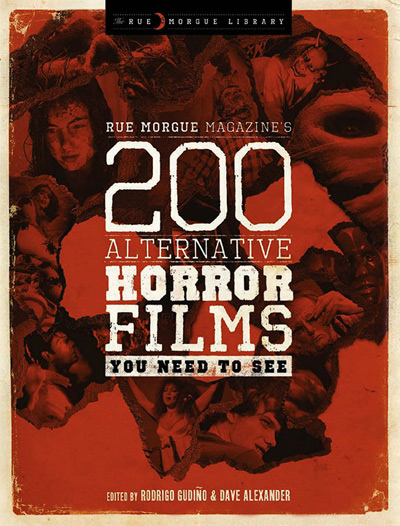
its theatrical run in the UK only lasted 2 weeks. Later that year Hitchcock released his similar film Psycho (which of course has become an immortal classic) and he surprised the press by telling them he wouldn't have a special pre-release screening for the film (a film industry standard that is still practiced today even). When asked why he wouldn't have the screening Hitchcock had this to say: "You saw what happened to Mickey's film (referring to Powell), therefore I'm serious when I say there will be no press screening. They may hate my film even more!" Peeping Tom essentially ruined Powell's career for the remainder of his life until shortly before his death the film earned praise by "New-Hollywood" directors like Martin Scorsese and Francis Ford Coppola. The film has regained the praise it missed initially, throughout the years becoming a cult classic as well as universally loved by critics, regarded as both a classic and an art film, and by many one of the greatest films of all time. Though the film can be tense at times (even though no graphic violence is ever shown on camera) it is worth watching all the way through, and I give it a 5/5. Instead of posting the trailer like I normally do, I've decided to include the film's opening scene below. The movie is also featured in Rue Morgue's 200 Alternative Horror Films You Need to See.
I've been told to see this one for years, and I'm glad I finally did. It's one of the most influential horror films ever made, and for good reasons. The bizarre and haunting score for the film was composed by legendary Oscar winning film composer Maurice Jarre (Lawrence of Arabia, Doctor Zhivago), the screenplay was written by the team of Boileau-Narcejac who are known for such film legends as Diabolique (1955), and Hitchcock's Vertigo (1958). The cinematography by Eugen Schufftan (Port of Shadows [1938], The Hustler [1961]) blends the styles of Jean Cocteau (Beauty and the Beast [1946]) with F.W. Murnau (Nosferatu [1922]). John Carpenter has even hinted that the famous Michael Myers' mask was inspired by the woman's mask in Eyes Without a Face, and let's not forget the Billy Idol hit song of the same name that was inspired by the film. Eyes is a french horror film about a doctor who is constantly trying to find a way to restore his daughter's face after she was disfigured in a car accident that he caused. As a result of the accident and her disfigurement, the daughter wears an eerie lifeless doll-like mask. In his search to repair her face however he has sought out experimental alternative methods that science and the medical profession would normally shun, he robs women of their faces in order to transplant them onto his daughter. Although the film's director insists the film's doctor is not a "mad doctor" this film influenced countless mad doctor/scientist movies that came after it. The doctor who at first sees normal turns out to be a cold emotionless sociopath, with no concern
of his victims. Along with the splendid music and cinematography, the acting is also flawless here. Although the film may seem a little dated (but in a way I can't quite put my finger on) it still stands the test of time feels less dated than some other films of a similar style from its era (Carnival of Souls [1962] for example). The only flaw I could see in this film was that the daughter's mask while great in its effect, was not actually a mask as you could see her lips move whenever she was "wearing" the mask and tried to speak. There were also some times when the film felt a little slow, but I feel as with many art house films, that was intentional and actually added to the unsettling feeling of the film. I give it a 5/5. The film is on the Criterion collection, and thus available on Hulu Plus. The film is also featured in Rue Morgue Magazine's 200 Alternative Horror Films You Need to See. Here's a link to a trailer someone constructed for the film.
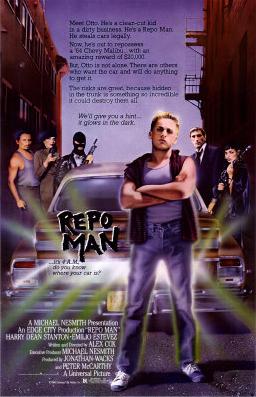
This is a wacky cult film in the same vibe as Fear and Loathing in Las Vegas or the Big Lebowski. Emilio Estevez plays an angsty rebellious punk youth dissatisfied with society who finds himself on the inside of the seedy world of Repo Men. A lot of the movie is just kind of like an episode of Seinfeld or a more eventful version Dazed and Confused; The movie jumps back and forth switching its focus from Estevez to the other repo men, to a bunch of criminals. a mysterious government agency, and a strange man driving a Chevy malibu which all the character slowly become focused on and in search of. The Chevy malibu contains a strange energy source in its trunk which emits a bright light that vaporizes anyone who opens the trunk.The movie slowly becomes more and more about aliens and has an apropriately wacky climax sequence with a flying car. This film can either be taken at face value as just a fun wacky viewing, but it can be analyzed as something deeper than that too. This film contains a lot of social commentary about youth and teen angst, as well as political commentary on the US in the 80s, the economy, and a message of anti-conformity, in my mind justifying why this one's a part of the Criterion Collection. This is a good one and the director received a lot of acclaim and praise for this film in which he showed great potential of things to come, but though he did the acclaimed Sid and Nancy (1986) and Walker (1987), this director never achieved the level of fame he deserved. Cox would go on to write and direct a film called Straight to Hell (1987), which was a western starring The Irish rock legends The Pogues, Joe Strummer (lead singer of The Clash), Courtney Love, Elvis Costello, Dennis Hopper Grace Jones, and Jim Jarmusch, as well as writing an unused screenplay for Fear and Loathing in Las Vegas (1998), and he was also originally considered to direct the original Robocop (see here). Even though I didn't love it and some of its logic was a bit too unbelievable, it fit with the weirdness of the film. It also has a great punk rock soundtrack featuring the likes of Iggy Pop and The Circle Jerks. I give it a 4.5/5. P.S. you also never find out what's in the trunk, which in my mind is what I think Pulp Fiction was referencing with its briefcase, but I've heard other theories about the briefcase so it's just a hunch. You can view the trailer below:
Why Pan's Labyrinth gets so much praise as Guillermo Del Toro's best film and Cronos (1993) and this film go unnoticed is beyond me. Both Cronos and this film are on the Criterion Collection and are Beautiful in many senses, visually, plotwise, set-wise, acting, effects, really great. Guillermo loves to use children in his pictures (Cronos, and he produced The Orphanage) I believe he was probably influenced by the classic spanish film The Spirit of the Beehive, that I also recommend and love, this one takes place in an orphanage during the spanish civil war in the 1940s, and a boy from the orphanage encounters a ghost. Whether you like Del Toro or not I recommend this one; Spooky, bloody and unique, it's like a combination of The Spirit of the Beehive, Au Revoir Les Enfants, and th violence of Pan's Labyrinth, I give it a 4.25/5; This film is also listed in Rue Morgue Magazine's 200 Alternative Horror Films You Need to See, view the trailer below:
This is without a doubt one of the weirdest movies I've ever seen: It's called The Cars That Ate Paris (1974) and it's the first film by one of my favorite directors, award winning Peter Weir ( Dead Poet's Society, Truman Show, Picnic at Hanging Rock). This film has nothing to do with cars eating people or Paris France, it does however have to do with a small Austrailian town called Paris. The film is a David Lynch-esque look at the dark side of 1950s style small town life being plagued by mad max-esque violent youths. It is gorgeously filmed, scored (musically) and acted, as well as funny, creepy and disturbing at times. It is a social commentary on rebellious youth/car-culture and the aging populations attempts to keep them under their thumb. Weir's early films all have very strange feels about them, but they're all really good, as the article about it in Rue Morgue Magazine's 200 Alternative Horror Films You Need to See says: "Remember, you can't spell weird, without Weir." I give it a 5/5, it also has the coolest/scariest car ever. This film is a part of the Criterion Collection and is available to stream with Hulu plus. You can view the trailer below:
This is the third film by Jim Jarmusch that I've seen, and I found it spectacular. The film is a series of three vignettes that all occur in Memphis during the same night and eventually all the characters' stories overlap. The film mainly centers around two japanese teens who make a pilgrimage to Memphis to visit Graceland and Sun Studios where Elvis and so many early rock greats recorded. The film is a great late night viewing, it shows what goes on during the wee hours of the morning in the city of Elvis, and as a night owl it's always nice to watch a good "late night movie" every now and then. It's heartwarming at times, hilarious throughout, serious, and a good portrayal of some of life's confusions, struggles and hardships. At times shocking and surprising, but fun throughout. Listen to this cast: Tom Waits, Steve Buscemi, Screamin' Jay Hawkins (of I Put a Spell on You fame), Joe Strummer (lead singer of the Clash), and soul legend Rufus Thomas ("Do the Funky Chicken" and "Walk the Dog") Tom Noonan (Heat, the bad guy in The Last Action Hero) and Rick Aviles (the bad guy from Ghost), and with such a great cast of musicians you can bet the soundtrack is good too. I'm really beginning to love Jarmusch's stuff, this film is also on Criterion. I give it a 5/5, and I highly recommend it.
P.S. instead of showing the trailer here I will instead include one of my favorite scenes with Screamin' Jay Hawkins. Context for this scene: one of the japanese tourists gave the bellboy a special Japanese plum as a tip (they do not understand the concept of "tipping" in Japan):
Terence Malick has only directed six movies in the last 40 years, and Badlands (1973) was his first film. The film is based on a real life murder spree committed by the young couple of Charles Starkweather and Caril Ann Fugate while travelling across the US in the 1950s. All of Terence Malick's films are critically acclaimed with very little to no negative reviews and I won't break the chain. Martin Sheen (father of Charlie Sheen and Emilio Estevez) and Sissy Spacek (the Original Carrie) are great in their respective roles: Sheen as a mentally delusional trigger happy emotionless anton Shugar (No Country For Old Men)-like character, who is simultaneously a James Dean lookalike/wannabe and mixed up youth, and Spacek as the mixed up naive 15 year old Sheen takes along on his ride. The film is beautiful visually, shot in the Badlands of South Dakota, and in telling it's story: the murders and murderers are not glorified, rather we see how delusional sheen's character is and the rise and fall of his relationship with Spacek as she realizes how crazy he really is. Think Bonnie & Clyde with Bonnie being a whole lot less involved. The film is now part of the Criterion Collection. I give it a 5/5. You can view the trailer below I recommend stopping around 2:02 though, because the rest of the trailer is pretty revealing of the rest of the movie:
Robocop was originally made as a satire of american popular culture when it came out, as well as a political satire, and it contained some religious symbolism. The director initially rejected the script calling it disgusting, but then his wife convinced him of its deeper implications. The director decided since Hollywood and popular culture was getting more and more violent he would add ultra violence to the film as part of its satire of popular culture (see here) the director's point would be proved when the film's deeper meanings were overlooked and it became a huge success and regarded as just another violent action flick. Robocop is also a tale showing how strong the human spirit and memory is stronger than machine. It spawned 2 sequels an animated series, a TV mini series, video games, comic books, countless toys, and the upcoming remake. I give it a 4.5-5/5, you can view the trailer below:





 This is the third film by Jim Jarmusch that I've seen, and I found it spectacular. The film is a series of three vignettes that all occur in Memphis during the same night and eventually all the characters' stories overlap. The film mainly centers around two japanese teens who make a pilgrimage to Memphis to visit Graceland and Sun Studios where Elvis and so many early rock greats recorded. The film is a great late night viewing, it shows what goes on during the wee hours of the morning in the city of Elvis, and as a night owl it's always nice to watch a good "late night movie" every now and then. It's heartwarming at times, hilarious throughout, serious, and a good portrayal of some of life's confusions, struggles and hardships. At times shocking and surprising, but fun throughout. Listen to this cast: Tom Waits, Steve Buscemi, Screamin' Jay Hawkins (of I Put a Spell on You fame), Joe Strummer (lead singer of the Clash), and soul legend Rufus Thomas ("Do the Funky Chicken" and "Walk the Dog") Tom Noonan (Heat, the bad guy in The Last Action Hero) and Rick Aviles (the bad guy from Ghost), and with such a great cast of musicians you can bet the soundtrack is good too. I'm really beginning to love Jarmusch's stuff, this film is also on Criterion. I give it a 5/5, and I highly recommend it.


 Terence Malick has only directed six movies in the last 40 years, and Badlands (1973) was his first film. The film is based on a real life murder spree committed by the young couple of Charles Starkweather and Caril Ann Fugate while travelling across the US in the 1950s. All of Terence Malick's films are critically acclaimed with very little to no negative reviews and I won't break the chain. Martin Sheen (father of Charlie Sheen and Emilio Estevez) and Sissy Spacek (the Original Carrie) are great in their respective roles: Sheen as a mentally delusional trigger happy emotionless anton Shugar (No Country For Old Men)-like character, who is simultaneously a James Dean lookalike/wannabe and mixed up youth, and Spacek as the mixed up naive 15 year old Sheen takes along on his ride. The film is beautiful visually, shot in the Badlands of South Dakota, and in telling it's story: the murders and murderers are not glorified, rather we see how delusional sheen's character is and the rise and fall of his relationship with Spacek as she realizes how crazy he really is. Think Bonnie & Clyde with Bonnie being a whole lot less involved. The film is now part of the Criterion Collection. I give it a 5/5. You can view the trailer below I recommend stopping around 2:02 though, because the rest of the trailer is pretty revealing of the rest of the movie:
